1What is a property management system (PMS) in the hospitality industry?
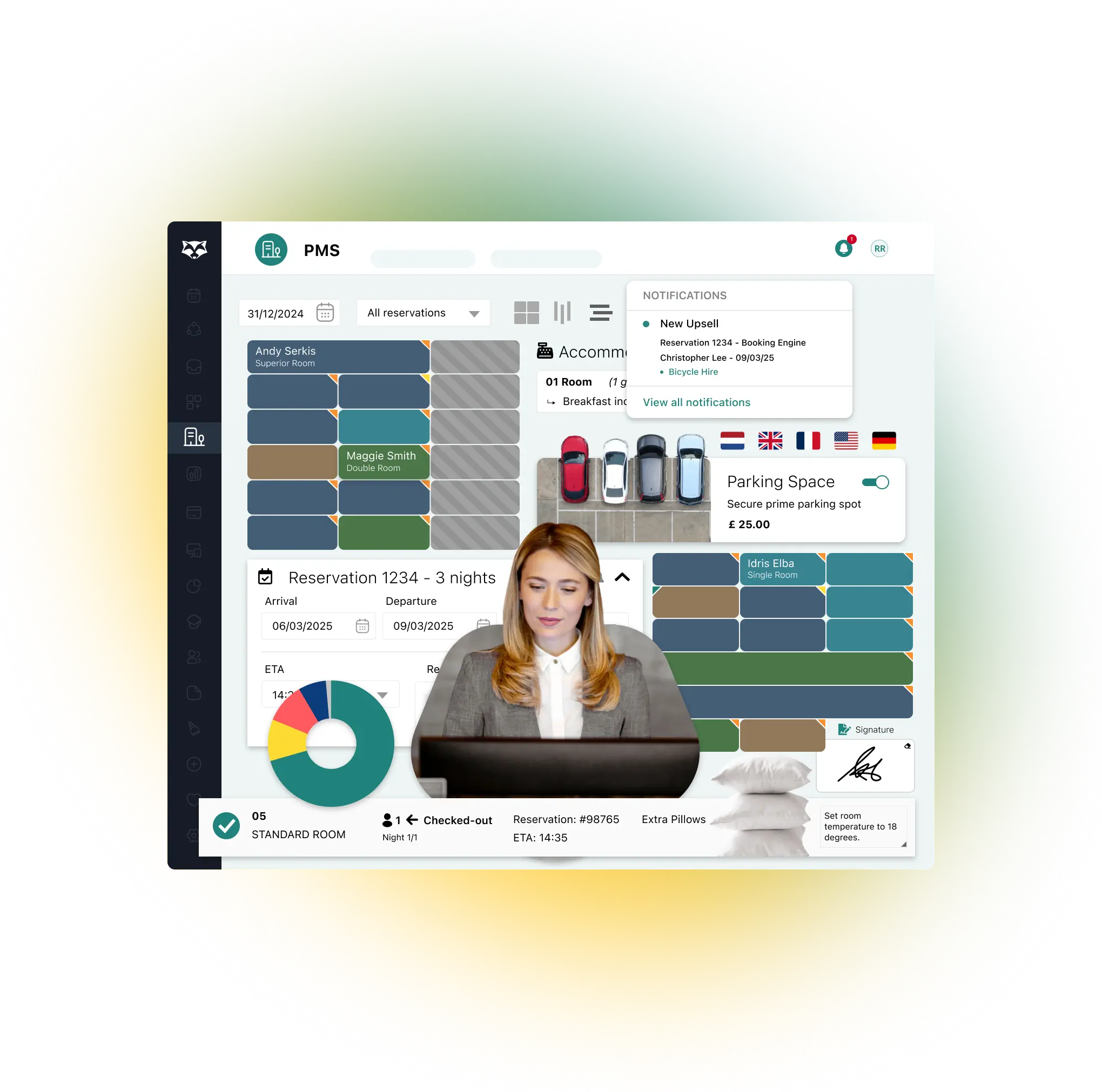
A property management system (PMS) is hotel software that centralises reservations, room allocation, guest profiles, payments, invoicing and operational workflows in one environment. It acts as the operational backbone connecting front desk, housekeeping, finance and distribution processes. In the UK market, a PMS replaces fragmented spreadsheets and manual processes with real-time data control, enabling accommodation providers to manage availability, guest communication and reporting from a single, cloud-based platform.
2How does a PMS differ from a channel manager and a booking engine?
A PMS manages internal hotel operations, while a channel manager distributes availability and rates to OTA’s and other sales channels, and a booking engine enables direct reservations on a hotel website. These systems serve different but interconnected roles. In modern hotel software ecosystems, the PMS acts as the core system of record, ensuring that all data shared with distribution channels and direct booking tools remains accurate and synchronised.
3Why is cloud-based PMS software essential for modern UK hotels?
Cloud-based PMS software allows hotels to access real-time operational data from any device, eliminating reliance on on-site servers. This flexibility is essential for UK operators managing multiple channels, remote teams or multi-property setups. Cloud systems also enable automatic updates, improved security standards and easier integrations, ensuring that hotels can adapt quickly to changing booking patterns, compliance requirements and guest expectations without complex IT infrastructure.
4What core functions should a modern hotel PMS include?
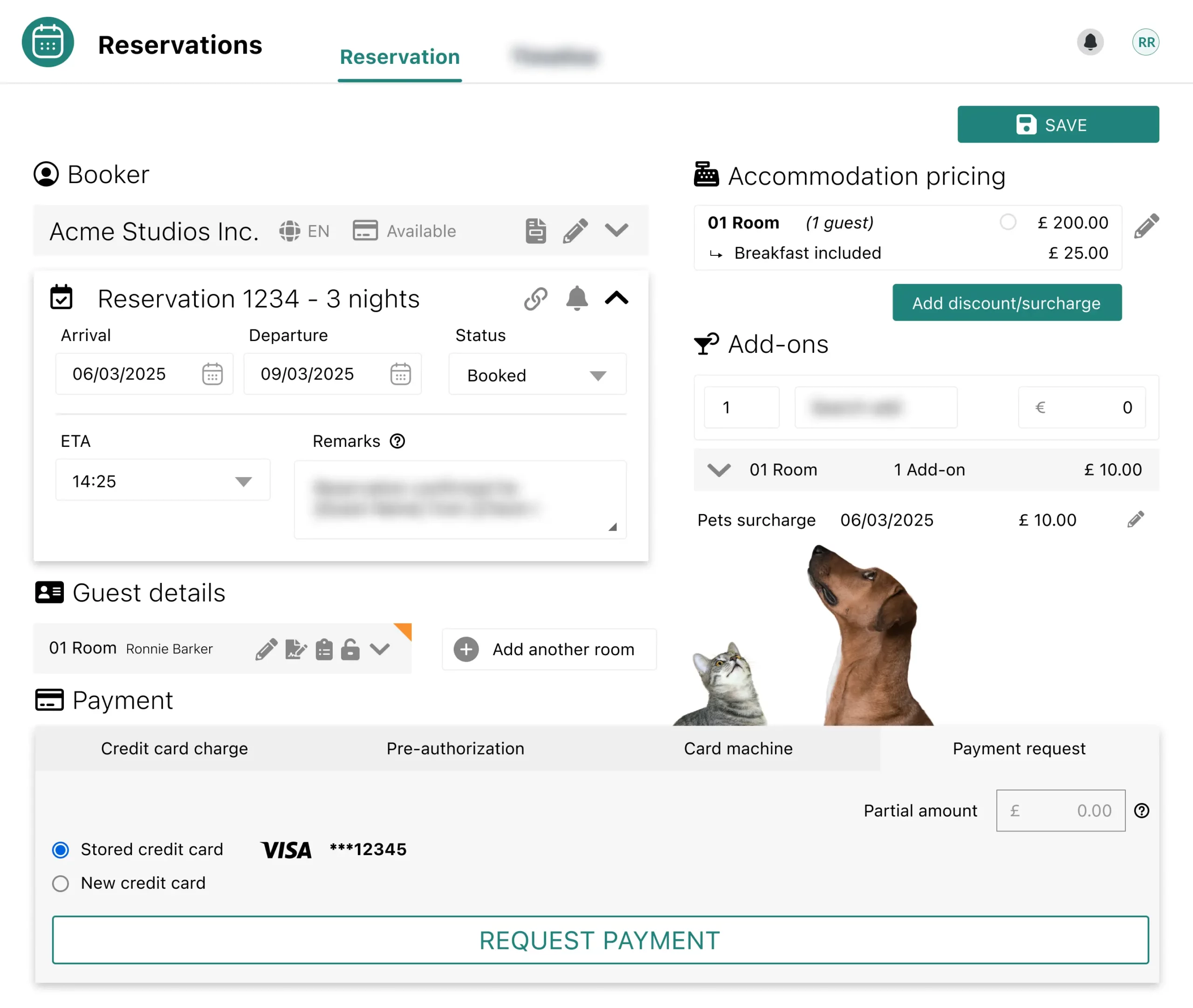
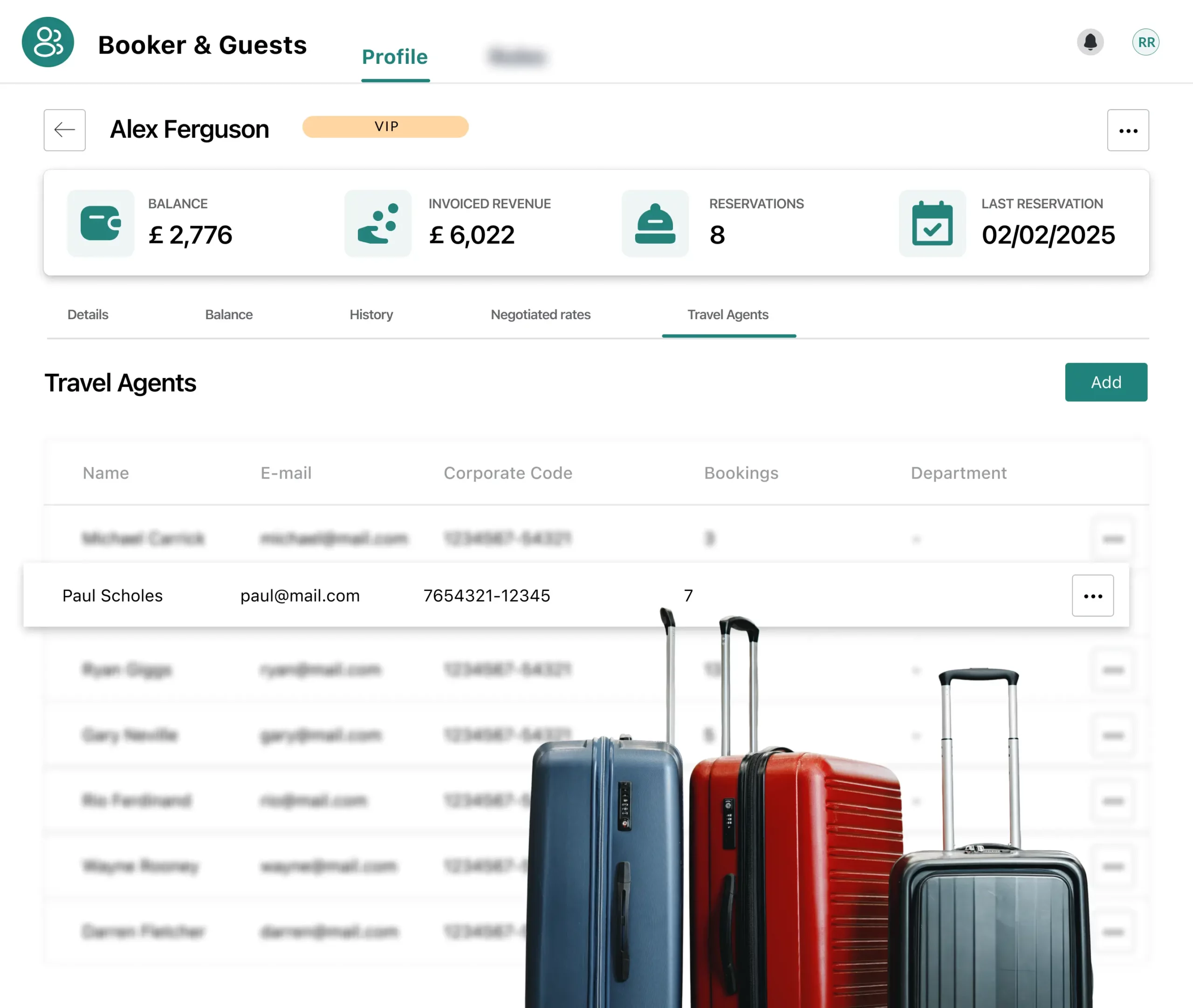
A modern PMS should include reservation management, room allocation, guest profiles, automated communication, invoicing, payment processing, reporting and housekeeping coordination. It should also support integrations with channel managers, booking engines and payment providers. The goal is to automate repetitive administrative tasks, reduce human error and ensure that all operational departments work with consistent, real-time data across the entire guest journey.
5How does a PMS help prevent overbookings and rate inconsistencies?
A PMS prevents overbookings by synchronising room availability across all booking channels through real-time data updates. When connected to a channel manager, it ensures that any reservation or cancellation is instantly reflected across OTA’s and direct channels. This eliminates discrepancies between systems and reduces the risk of double bookings, while also maintaining accurate pricing and availability, which is critical for maintaining guest satisfaction and operational efficiency.
6What are the main operational and commercial benefits of using a PMS?
A PMS improves efficiency by automating manual tasks, reducing administrative workload and enabling faster check-in and check-out processes. Commercially, it enhances revenue control by providing real-time insights into occupancy, pricing and booking sources. For UK accommodation providers, this combination of operational clarity and commercial visibility supports better decision-making, improves guest experience and reduces reliance on error-prone manual workflows.
7Which types of accommodation businesses in the UK need a PMS?
A PMS is relevant for hotels, guest houses, B&Bs, serviced apartments and multi-property accommodation providers. The need is driven by operational complexity rather than size. Any business managing multiple booking channels, dynamic pricing, guest communication or housekeeping coordination benefits from a centralised system. As soon as manual processes become time-consuming or error-prone, a PMS becomes a practical necessity rather than a luxury.
8How does a PMS support direct bookings and reduce OTA dependency?
A PMS supports direct bookings by integrating with a booking engine that displays real-time availability and pricing on a hotel’s website. This enables guests to book directly without manual intervention. By improving direct booking capability, hotels can reduce reliance on OTA’s, retain more control over pricing and guest data, and improve profit margins while maintaining a balanced distribution strategy.
9How does a PMS integrate with OTA’s and distribution channels?
A PMS integrates with OTA’s through a channel manager, which distributes rates and availability across platforms such as Booking.com and Expedia. The PMS ensures that all booking data flows back into one central system. This integration reduces manual updates, prevents discrepancies and allows hotels to manage multiple distribution channels efficiently while maintaining accurate inventory and pricing across all platforms.
10What reporting and analytics capabilities should a PMS provide?
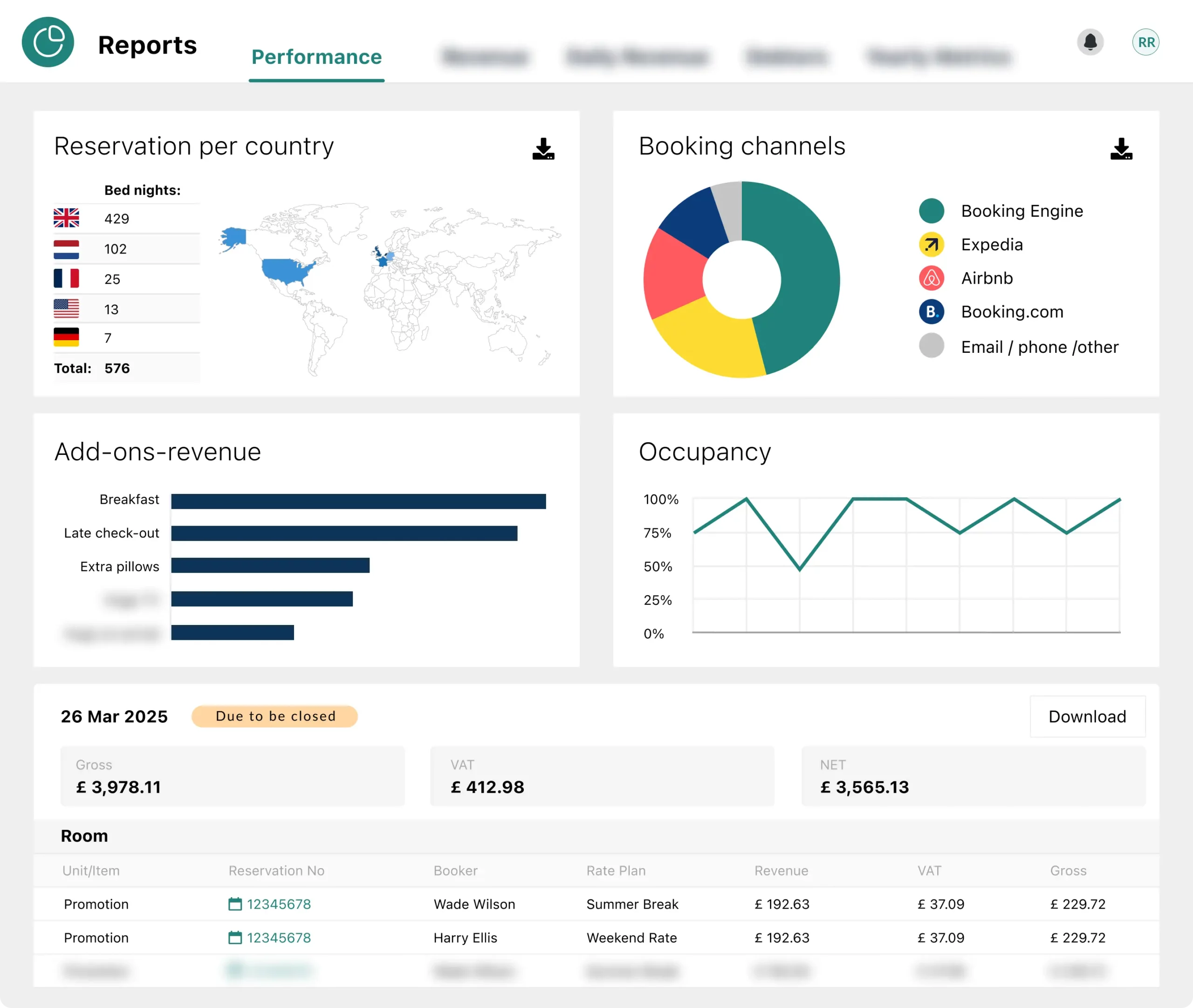
A PMS should provide detailed reporting on occupancy rates, revenue performance, booking sources, average daily rate, revenue per available room and guest behaviour trends. These insights enable hotels to make informed decisions on pricing, marketing and operations. Advanced reporting also supports forecasting and revenue management strategies, helping UK hotels optimise performance and respond proactively to market demand.
11How does a PMS contribute to revenue management strategies?
A PMS contributes to revenue management by providing accurate, real-time data on bookings, occupancy and demand trends. This data supports pricing decisions, rate adjustments and inventory control. When integrated with revenue management tools or dynamic pricing strategies, a PMS enables hotels to maximise revenue by aligning pricing with demand patterns, booking pace and channel performance.
12What integrations are critical when selecting a PMS?
Critical integrations include channel managers, booking engines, payment providers, accounting software, revenue management tools and guest communication systems. These integrations ensure seamless data flow across all operational areas. A PMS that integrates effectively reduces duplication of work, improves accuracy and allows hotels to build a scalable technology ecosystem that supports both operational efficiency and commercial growth.
13How long does it typically take to implement a PMS?
Implementation timelines vary depending on property complexity, data migration requirements and integration setup. A small property may go live within days or weeks, while larger or multi-property operations may require several weeks. The key factors include configuring room types, rate plans, tax settings, integrations and staff training. A structured onboarding process ensures that the PMS is configured correctly and supports smooth day-to-day operations from launch.
14What data should be migrated when switching to a new PMS?
Key data to migrate includes future reservations, guest profiles, room configurations, rate plans, availability rules and financial records. Historical data may also be transferred for reporting purposes. The focus should be on ensuring continuity of operations and accurate reporting rather than migrating unnecessary legacy data. Proper data migration is critical to maintaining booking accuracy and avoiding operational disruptions.
15How should hotels evaluate the cost of a PMS in the UK market?
PMS cost should be evaluated based on total value rather than subscription price alone. This includes setup costs, integrations, training, support and time savings achieved through automation. UK hotels should consider how the system reduces manual workload, prevents costly errors and improves revenue performance. A well-chosen PMS delivers measurable return on investment through efficiency gains and improved commercial outcomes.
16What UK data protection regulations apply when using a PMS?
UK hotels must comply with UK GDPR when using a PMS, ensuring that guest data is processed lawfully, securely and transparently. This includes managing personal data such as names, contact details and payment information. Hotels must implement appropriate access controls, data retention policies and security measures to protect guest information and maintain compliance with data protection laws.
17Can a PMS help with legal guest registration requirements in the UK?
A PMS can support guest registration by securely storing required guest details such as name and nationality. UK accommodation providers must maintain guest records for regulatory purposes, and a PMS simplifies this process by digitising records and ensuring easy retrieval. This reduces administrative burden and improves compliance with local regulations.
18How does a PMS impact payment processing and PCI compliance?
A PMS integrates with payment providers to manage deposits, pre-authorisations, balances and refunds. Secure handling of payment data is essential, and compliance with PCI DSS standards ensures that card information is protected. By integrating payments within the PMS, hotels can reduce manual handling of sensitive data and streamline financial workflows while maintaining high security standards.
19What role does price transparency play in hotel booking systems in the UK?
Price transparency requires that all mandatory fees and charges are clearly displayed to guests during the booking process. UK regulations emphasise fair pricing practices, preventing hidden fees or misleading pricing structures. A PMS integrated with a booking engine ensures that pricing is consistent and transparent across all channels, helping hotels maintain compliance and build trust with guests.
20How does a PMS improve housekeeping and operational coordination?
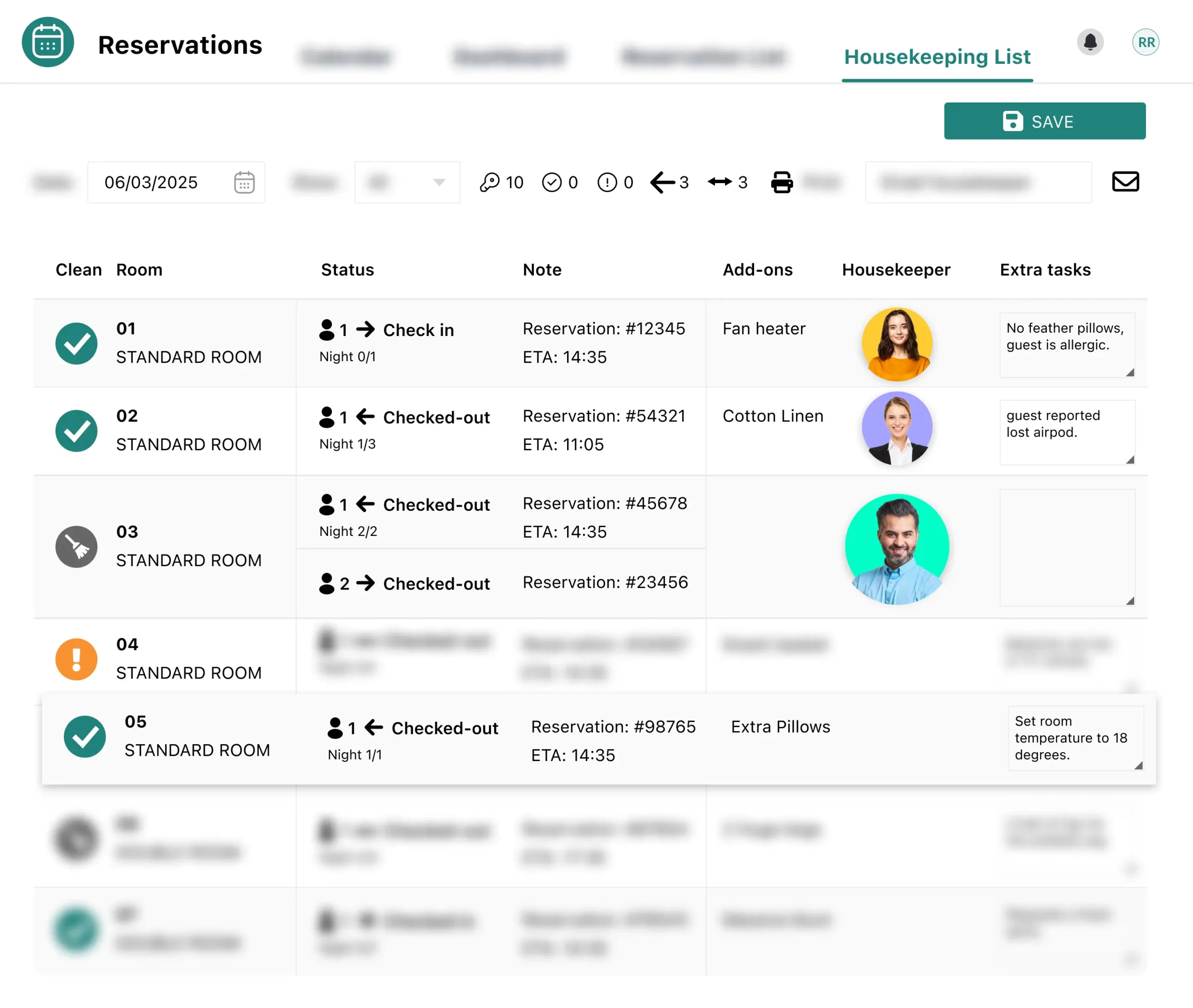
A PMS improves coordination by providing real-time visibility of room status, arrivals and departures. Housekeeping teams can update room readiness, while front desk staff can prioritise check-ins accordingly. This reduces communication gaps, speeds up room turnover and ensures that all departments operate with aligned information, improving overall efficiency and guest satisfaction.
21Can small hotels and B&Bs benefit from using a PMS?
Small hotels and B&Bs benefit significantly from a PMS because it reduces administrative workload and simplifies multi-channel booking management. Even with limited staff, automation of reservations, payments and communication improves efficiency. A PMS enables smaller properties to operate with the same level of control and professionalism as larger hotels, supporting growth and improved guest service.
22What features are important for multi-property hotel operations?
Multi-property operators need centralised reporting, shared inventory management, user permissions and the ability to manage multiple locations from one dashboard. A PMS should allow standardisation of processes while maintaining flexibility for individual property needs. This enables efficient oversight, consistent reporting and streamlined operations across an entire portfolio.
23How does a PMS support mobile and remote hotel management?
A cloud PMS enables managers to access operational data remotely via mobile devices. This allows real-time monitoring of reservations, occupancy and performance without being on-site. Remote access improves responsiveness, supports flexible working and enables faster decision-making, which is especially valuable for UK operators managing multiple properties or working with lean teams.
24What should hotels consider before choosing a PMS solution?
Hotels should evaluate usability, integration capabilities, scalability, compliance features, reporting depth and support quality. The system should align with the property’s operational needs and growth strategy. Testing workflows, understanding onboarding processes and assessing long-term flexibility are essential to ensure that the PMS supports both current operations and future expansion.
25Why might a UK hotel choose RoomRaccoon as its PMS?
RoomRaccoon combines PMS functionality with channel management, booking engine, payments and reporting in one platform, offering a unified solution for hotel operations and distribution. For UK hotels seeking to reduce system fragmentation, streamline workflows and improve operational control, this integrated approach can simplify daily processes while maintaining visibility across reservations, revenue and guest interactions.