1What is automated upselling in hotel operations?
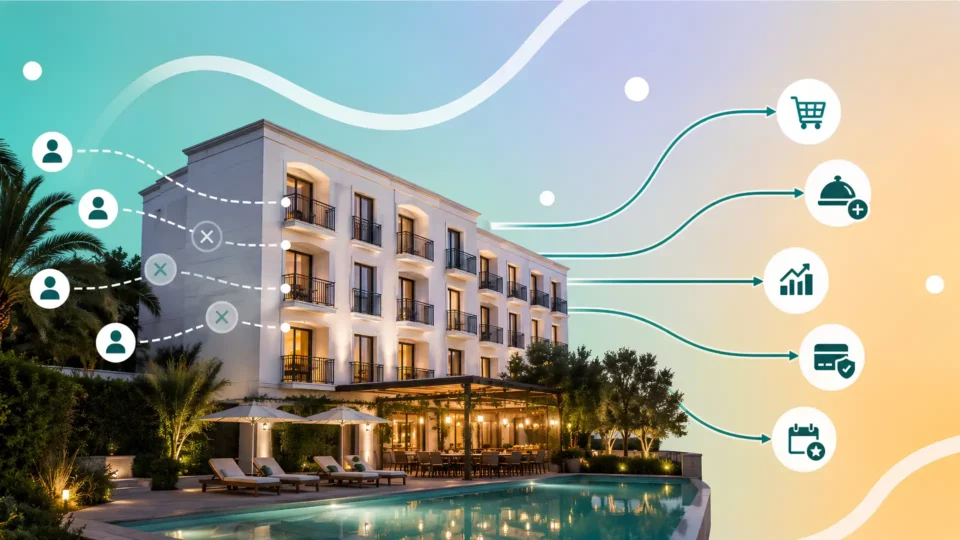
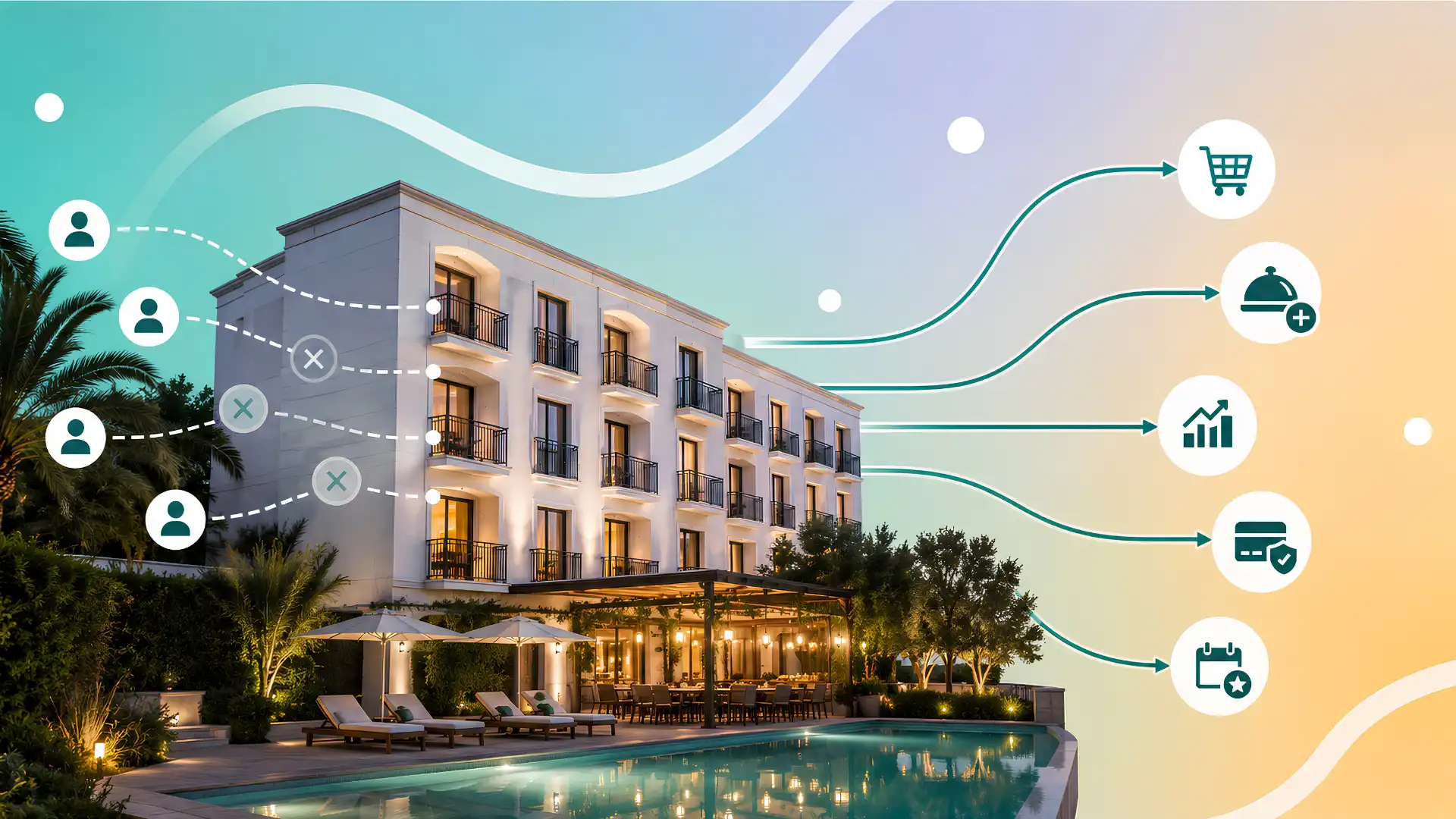
Automated upselling is a hotel technology function that automatically presents guests with paid upgrades, add-ons, or enhanced services during the digital booking journey. Instead of relying on staff to manually offer extras, the software triggers contextual offers based on reservation data within a Property Management System (PMS). Typical examples include room upgrades, breakfast packages, parking, late check-out, or experiences. Because the process is integrated with booking and payment workflows, accepted offers are immediately recorded in the reservation and operational systems.
2How does automated upselling work with a PMS, Channel Manager, and Booking Engine?
Automated upselling operates through tight integration between a hotel’s Property Management System, Booking Engine, and sometimes its Channel Manager. The PMS provides reservation details, the Booking Engine enables guest interaction during booking or pre-arrival, and the Channel Manager ensures room inventory and availability remain synchronised across OTA platforms. When the system identifies an eligible reservation, it automatically triggers an offer, processes payment through the connected payment gateway, and updates the booking record in the PMS without manual intervention.
3Why is automated upselling becoming important for hotels in the UK hospitality market?
Automated upselling has become strategically important in the UK hospitality market because accommodation providers increasingly rely on digital guest journeys and operational efficiency. Rising labour costs, fluctuating occupancy levels, and strong OTA competition encourage hotels to maximise revenue per reservation rather than relying only on room rates. Automated upselling supports this by monetising services that would otherwise remain unsold, such as upgrades or add-ons, while reducing manual workload for front desk staff and improving operational consistency.
4What is the difference between manual upselling and automated upselling in hotels?
What is the difference between manual upselling and automated upselling in hotels?
5What types of hotel services and extras can be sold through automated upselling?
Automated upselling typically focuses on services that are clearly priced and operationally manageable. Examples include room upgrades, early check-in, late check-out, breakfast, parking, spa access, airport transfers, romantic packages, and activity bookings. In most implementations these extras are configured inside the PMS as sellable items connected to inventory or services. When the guest accepts an offer, the system adds the item directly to the reservation, ensuring the relevant department such as housekeeping or reception can deliver it correctly.
6When should hotels present upsell offers to guests during the booking journey?
The most effective upselling moments occur when guests are already engaged with their reservation. These usually include the direct Booking Engine checkout page, confirmation emails, pre-arrival communication, and online check-in. Timing matters because offers should appear when the guest is planning the stay rather than after arrival. Presenting optional extras before the stay allows guests to make informed decisions and ensures operational teams have time to prepare services such as upgraded rooms or additional amenities.
7Can automated upselling be used for both direct bookings and OTA reservations?
Yes, automated upselling can work for both direct bookings and OTA reservations when the hotel’s systems are properly integrated. Direct bookings processed through the Booking Engine are the easiest to monetise because the hotel controls the entire digital journey. However, OTA reservations can also generate additional revenue when the reservation data is imported into the PMS. Pre-arrival emails or online check-in flows can then present personalised upgrade and add-on options to those guests.
8How does automated upselling support hotel revenue management strategies?
Automated upselling complements revenue management by increasing the total value of each reservation after the room rate has already been confirmed. While revenue management systems optimise pricing and inventory distribution, upselling focuses on ancillary revenue opportunities. When integrated with PMS reporting and revenue analytics, hotels can track how upgrades, packages, and services influence average booking value, total revenue per available room, and guest spending patterns, helping revenue managers make more informed commercial decisions.
9How much does automated upselling software typically cost for hotels?
The cost of automated upselling software varies depending on property size, system architecture, and whether the feature is part of an integrated hotel platform or a standalone tool. Pricing models may include monthly subscriptions, per-room fees, or bundled packages that combine PMS, Channel Manager, and Booking Engine functionality. Hotels should evaluate implementation costs, payment processing fees, training requirements, and support services when calculating the real financial impact of introducing automated upselling capabilities.
10Does automated upselling improve guest experience or only increase revenue?
Automated upselling can improve both guest experience and revenue when implemented thoughtfully. Guests benefit from transparent options that allow them to customise their stay without needing to contact the hotel directly. Clear pricing, simple payment options, and relevant offers make the booking journey more convenient. At the same time, hotels generate additional revenue by selling services that enhance the guest experience, such as upgrades or add-ons that improve comfort, convenience, or flexibility during the stay.
11Is automated upselling suitable for small hotels, inns, and B&Bs in the UK?
Automated upselling is particularly useful for independent hotels, boutique properties, inns, and B&Bs in the UK because smaller teams often manage reservations, guest communication, and operations simultaneously. Automation helps ensure every reservation receives consistent upgrade opportunities without requiring additional staff time. Cloud-based hotelsoftware makes this accessible even for smaller properties, allowing them to automate guest messaging, manage reservations through a PMS, and generate additional revenue from optional services.
12How long does it usually take to implement automated upselling in a hotel system?
Implementation timelines vary depending on system complexity, integrations, and property size. In most cases the process includes configuring room types, defining available extras, connecting payment gateways, integrating the Booking Engine, and testing automated workflows. When upselling functionality is embedded within an existing PMS platform, deployment is typically faster because reservation data and inventory structures are already configured. Staff training and workflow adjustments are also necessary to ensure operational teams deliver purchased extras correctly.
13What guest data is required for automated upselling to function effectively?
Automated upselling relies on reservation data stored in the PMS to determine which offers are relevant to a specific guest. Key data points typically include stay dates, room type, number of guests, booking source, and guest contact information. Some systems also use historical booking behaviour or segmentation rules to personalise offers. Hotels must ensure this data is accurate and responsibly managed because automated decisions rely on reliable reservation records and consistent guest profiles.
14What role does online check-in play in automated upselling?
Online check-in is a powerful moment for automated upselling because guests are actively preparing for their arrival. During this stage, the system can present relevant upgrades, services, or extras that complement the reservation. Because identity verification, payment confirmation, and arrival details are already part of the process, guests can easily add services such as breakfast, parking, or late check-out. This reduces front desk workload while increasing the likelihood that guests purchase additional services.
15How can automated upselling help hotels manage staffing challenges?
Automated upselling reduces the operational burden on hotel staff by removing repetitive tasks related to offering upgrades and processing add-ons. Instead of manually contacting guests, sending offers, or adjusting reservations, the software handles these steps automatically. This allows front desk teams to focus on guest service and operational coordination. For hotels experiencing labour shortages or fluctuating staffing levels, automation can improve efficiency while maintaining consistent revenue opportunities across all reservations.
16What UK pricing and consumer transparency rules affect hotel upselling?
Hotels operating in the UK must follow consumer protection and price transparency rules when presenting optional services. Mandatory charges must typically be included in the displayed booking price, while optional extras can be offered separately if they are clearly voluntary and not pre-selected by default. Automated upselling systems must therefore ensure that guests actively choose additional services. Transparent pricing, clear descriptions, and visible totals help maintain compliance with UK consumer protection expectations.
17How does UK GDPR influence automated upselling and guest personalisation?
UK GDPR requires hotels to process personal data lawfully, transparently, and securely. Automated upselling systems often rely on reservation data and guest profiles to personalise offers, which means hotels must clearly explain how guest data is used and stored. Privacy policies, secure data handling, and limited data retention are essential. Hotels must also ensure that personalisation practices remain proportionate and aligned with legitimate business purposes within the hospitality environment.
18Which payment methods are most relevant for automated upselling in the UK?
In the UK hospitality market, card payments remain the dominant method for hotel transactions, including debit cards, credit cards, and contactless payments. Automated upselling systems typically integrate with payment gateways so guests can confirm add-ons instantly during the booking journey or pre-arrival stage. A smooth digital payment experience is important because friction during checkout reduces upsell conversion. Mobile-friendly payment flows are particularly relevant as many guests manage reservations on smartphones.
19Why are OTA integrations important for automated upselling strategies?
OTA integrations are important because many hotel reservations originate from platforms such as online travel agencies rather than direct channels. When OTA bookings are automatically imported into the PMS through a Channel Manager, the hotel can still present upgrade and add-on offers through pre-arrival communication or online check-in. Without proper integration, those reservations remain isolated, limiting the hotel’s ability to monetise additional services or personalise the guest journey.
20Which performance metrics should hotels track to evaluate upselling success?
Hotels evaluating automated upselling performance typically analyse several key metrics. These include upsell conversion rate, average booking value, ancillary revenue per reservation, acceptance rate of upgrades, and revenue generated from add-ons. Additional insights may come from analysing results by booking source, room category, or stay duration. Tracking these metrics within PMS reporting systems helps hotels understand how automated upselling contributes to overall revenue performance and operational efficiency.
21How can hotels ensure automated upselling does not feel intrusive to guests?
Successful automated upselling focuses on relevance and timing rather than frequency. Hotels should present a limited number of meaningful offers that match the guest’s stay context. Clear language, transparent pricing, and easy acceptance or decline options are important. When offers are personalised using reservation details such as length of stay or guest type, they are more likely to feel helpful rather than promotional. The goal is to support guest choice rather than pressure additional spending.
22What is the difference between upselling, cross-selling, and ancillary revenue in hospitality?
Upselling usually refers to encouraging guests to purchase a higher-value version of their existing reservation, such as a room upgrade. Cross-selling involves offering related services like breakfast, parking, or spa access that complement the stay. Ancillary revenue is the broader financial category that includes all additional revenue streams beyond the base room rate. Understanding these distinctions helps hotels structure pricing strategies and analyse revenue contributions more effectively within PMS reporting systems.
23Which system integrations are essential before launching automated upselling?
Hotels preparing to launch automated upselling should ensure several core integrations are already in place. These typically include the Property Management System, Booking Engine, payment gateway, and Channel Manager. Additional integrations such as online check-in, guest messaging systems, and reporting tools can further improve timing and operational coordination. When these systems communicate effectively, hotels can deliver a seamless guest journey while ensuring reservations, payments, and services remain synchronised.
24Why is cloud-based hotelsoftware important for automated upselling?
Cloud-based hotelsoftware enables automated upselling because it allows reservation data, guest communication, and payment processing to operate in real time across multiple systems. Cloud platforms ensure that PMS data, OTA reservations, Booking Engine interactions, and guest messaging remain synchronised. This connectivity makes it possible to trigger automated offers at the right moment in the guest journey. Cloud infrastructure also allows hotels to scale operations, update features, and manage integrations without relying on on-site servers.
25How does RoomRaccoon support automated upselling for UK hotels?
RoomRaccoon provides automated upselling as part of its integrated hospitality platform designed for independent hotels and accommodation providers. The system combines a Property Management System, Booking Engine, Channel Manager, payments, and guest journey automation within a cloud-based environment. Within this ecosystem, automated upselling allows hotels to present upgrades and add-ons during the booking process or pre-arrival stages, automatically update reservations, and record additional revenue inside the central PMS.