1What is a hotel booking engine?
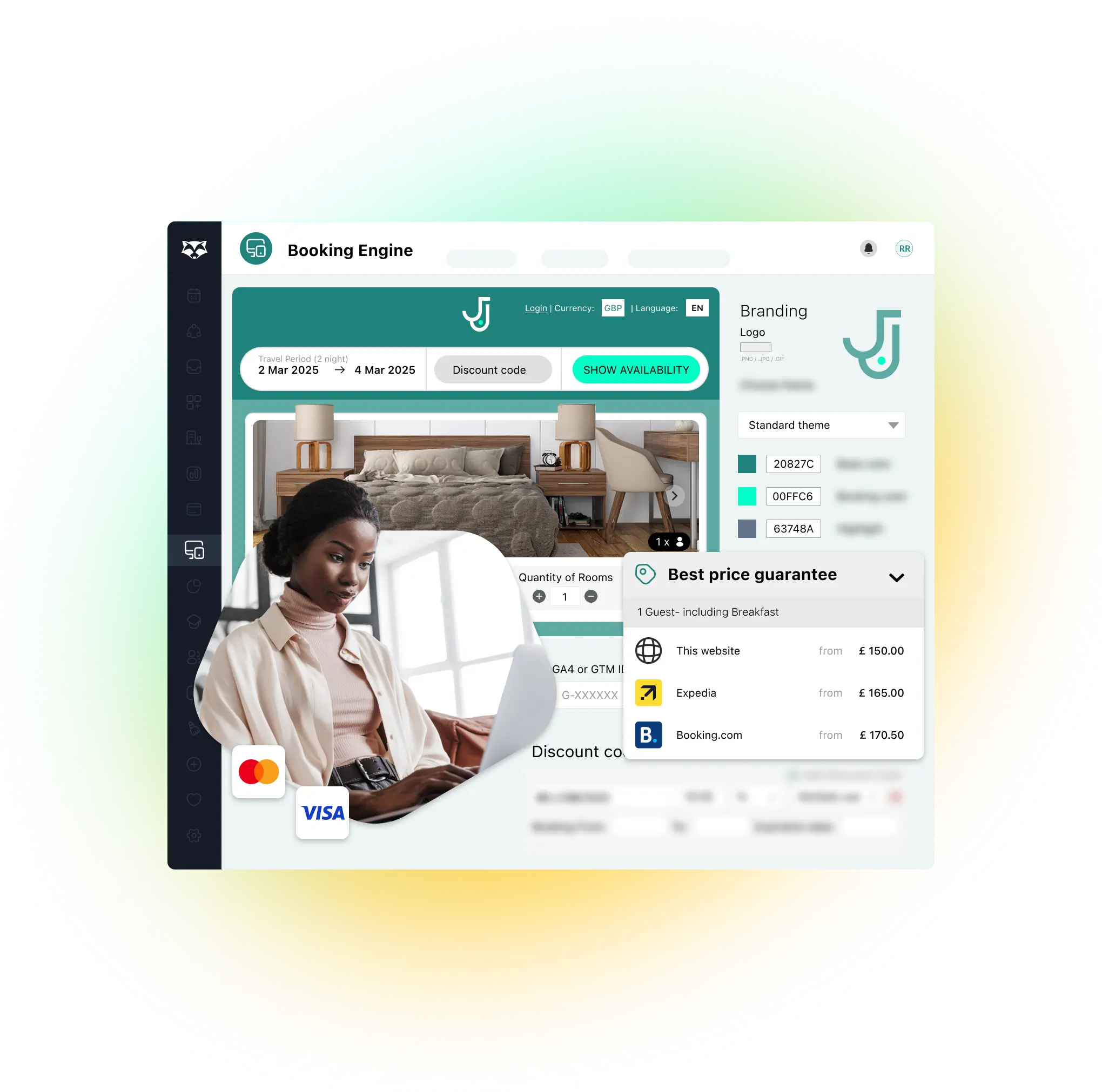
A hotel booking engine is software that enables guests to check real-time availability, view room types, compare rates, and complete reservations directly on a hotel’s website. It functions as the property’s primary direct sales channel, reducing reliance on third-party platforms. When integrated with a PMS and Channel Manager, it ensures live inventory synchronisation, automated reservation handling, and consistent pricing across all channels, making it a critical component of modern hotel technology infrastructure.
2How is a booking engine different from a Property Management System (PMS)?
A booking engine is the guest-facing interface that captures direct reservations, while a Property Management System (PMS) is the operational backbone used to manage bookings, guest data, housekeeping, billing, and reporting. The PMS processes and organises all reservation data internally, whereas the booking engine focuses on conversion. When integrated, reservations flow automatically into the PMS, eliminating manual input, improving operational efficiency, and ensuring accurate room availability and guest records across systems.
3What is the difference between a booking engine and a Channel Manager?
A booking engine converts website visitors into direct bookings, whereas a Channel Manager distributes room availability and rates to external platforms such as OTA’s and keeps them synchronised. The booking engine focuses on direct revenue generation, while the Channel Manager manages indirect distribution. Together, they ensure that all sales channels—direct and third-party—operate from the same real-time inventory, preventing overbookings and maintaining rate consistency across the hotel’s entire distribution ecosystem.
4Why is a booking engine essential for hotels in the UK market?
A booking engine is essential in the UK because it allows accommodation providers to capture direct bookings, reduce dependency on OTA’s, and maintain control over pricing and guest relationships. In a competitive and cost-sensitive hospitality market, improving direct conversion helps protect margins and streamline operations. It also aligns with evolving guest expectations for instant online booking, mobile usability, and transparent pricing, making it a key driver of both operational efficiency and commercial performance.
5What are the key benefits of using a booking engine for direct bookings?
A booking engine enables hotels to increase direct revenue, reduce third-party commission exposure, and gain full control over pricing, availability, and promotions. It also improves guest data ownership, allowing better communication and personalised service. Additionally, it supports automation, reduces manual reservation handling, and enables upselling during the booking journey. These combined benefits contribute to improved profitability, stronger brand positioning, and more efficient day-to-day hotel operations.
6Are there any disadvantages or limitations of using a booking engine?
A booking engine requires proper implementation, integration, and ongoing optimisation to perform effectively. Without sufficient website traffic or a strong digital strategy, direct booking volume may remain limited. There are also setup considerations such as configuration, payment integration, and staff training. Additionally, properties must ensure compliance with UK regulations such as GDPR and payment authentication rules, which can introduce complexity if not managed correctly within the system setup.
7Which types of accommodation benefit most from a booking engine?
A booking engine is valuable for hotels, B&Bs, guesthouses, serviced apartments, and small hotel groups that want to manage direct reservations efficiently. It is particularly beneficial for independent operators seeking greater control over pricing, availability, and guest relationships. Properties with dynamic pricing, multiple room types, or high booking volumes benefit most, as the system automates processes and reduces manual workload while improving consistency across all booking channels.
8What features should a modern hotel booking engine include?
A modern booking engine should include real-time availability, rate management, secure payment processing, mobile optimisation, and seamless integration with PMS and Channel Manager systems. It should also support promo codes, upselling, multi-language functionality, and flexible rate plans. Advanced features may include reporting tools, automation workflows, and guest communication triggers. These capabilities ensure both operational efficiency and a smooth user experience that maximises booking conversion.
9How does a booking engine reduce overbookings and operational errors?
A booking engine reduces overbookings by synchronising availability in real time with the PMS and Channel Manager. Every confirmed booking automatically updates inventory across all connected channels, eliminating discrepancies caused by manual updates. This automation reduces administrative workload and human error, ensuring accurate availability at all times. As a result, hotels can operate more efficiently while providing a more reliable booking experience for guests.
10Why is mobile optimisation critical for booking engine performance?
Mobile optimisation is critical because a significant share of hotel bookings in the UK is completed on smartphones. A booking engine must provide a fast, intuitive, and frictionless mobile experience to prevent drop-offs during the reservation process. Poor mobile usability can directly reduce conversion rates. A well-optimised mobile interface ensures guests can easily browse rooms, view pricing, and complete secure payments, which is essential for maximising direct booking revenue.
11Which payment methods should a booking engine support in the UK?
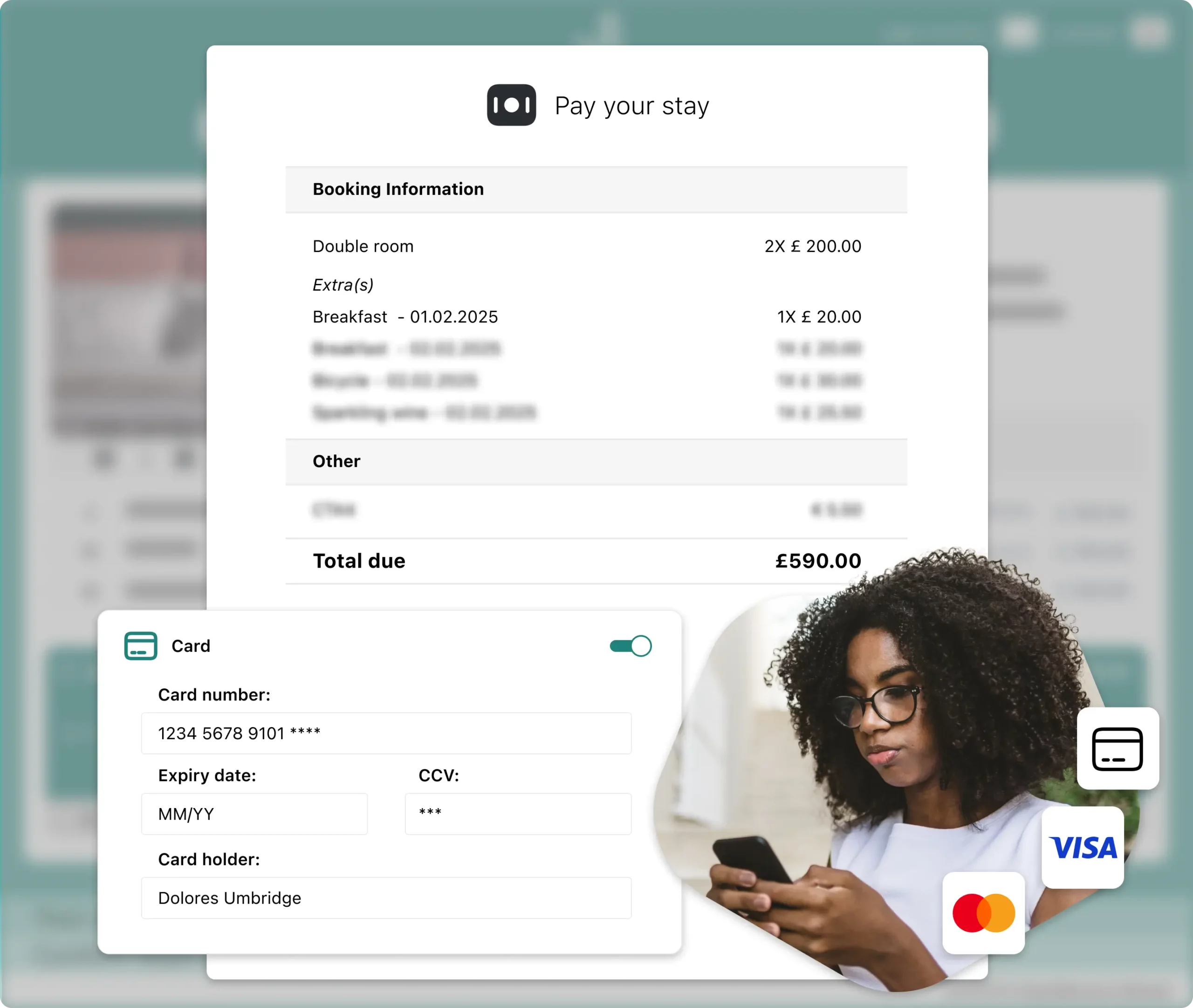
A booking engine in the UK should support major debit and credit cards, as well as widely used digital payment methods such as mobile wallets. It must also integrate with secure payment providers and support compliant authentication processes. Providing flexible and familiar payment options improves conversion rates and reduces friction during checkout. Secure, reliable payment handling is essential for building trust and ensuring successful transaction completion.
12How does Strong Customer Authentication (SCA) impact hotel bookings?
Strong Customer Authentication (SCA) is a UK and European regulation requiring additional verification for many online payments. In a booking engine, this means guests may need to complete extra authentication steps during checkout. While it enhances payment security and reduces fraud, it can also affect conversion if not implemented smoothly. A well-integrated payment flow ensures compliance while maintaining a user-friendly booking experience.
13What GDPR and data protection requirements apply to booking engines in the UK?
A booking engine must comply with UK GDPR by ensuring transparent data collection, secure storage, and lawful processing of guest information. This includes providing clear privacy policies, obtaining consent where required, and protecting personal and payment data. Hotels must also manage data retention and third-party data sharing responsibly. Compliance is essential not only for legal reasons but also for maintaining guest trust and safeguarding business reputation.
14How important is accessibility in a hotel booking engine?
Accessibility is essential to ensure all users, including those with disabilities, can complete a booking without barriers. A booking engine should follow accessibility best practices such as clear navigation, readable content, and compatibility with assistive technologies. In the UK, providing accessible booking options is both a legal and commercial consideration, helping properties reach a wider audience and deliver an inclusive guest experience.
15How does a booking engine support revenue management strategies?
A booking engine supports revenue management by enabling dynamic pricing, rate plan control, and real-time availability adjustments. It allows hotels to respond quickly to demand fluctuations and optimise pricing strategies. Integration with PMS and Channel Manager systems ensures consistent rate distribution. This alignment helps maximise revenue per available room while maintaining control over inventory and booking conditions.
16Can a booking engine increase ancillary revenue and upselling opportunities?
A booking engine increases ancillary revenue by offering add-ons such as breakfast, upgrades, or late check-out during the booking process. These upsell opportunities are presented when guests are most engaged, increasing the likelihood of additional purchases. This not only boosts total booking value but also enhances the guest experience by allowing customisation before arrival.
17Why are integrations with PMS, Channel Manager, and other systems important?
Integrations ensure seamless data flow between systems, reducing manual work and improving accuracy. A connected ecosystem allows real-time updates across booking engine, PMS, and distribution channels. This improves operational efficiency, reporting accuracy, and revenue management capabilities. Without integrations, hotels risk inconsistencies, errors, and increased administrative workload.
18How should hoteliers measure booking engine performance and conversion rates?
Performance should be measured using metrics such as conversion rate, booking abandonment, average booking value, and share of direct bookings. Analysing user behaviour within the booking engine helps identify friction points. Tracking these metrics enables continuous optimisation of pricing, user experience, and marketing strategies, ensuring the booking engine contributes effectively to revenue growth.
19What does the implementation process of a booking engine involve?
Implementation involves configuring room types, rate plans, availability rules, payment settings, and system integrations. It also includes embedding the booking engine into the website and testing booking flows. Staff training is essential to ensure smooth operation. A structured implementation ensures accuracy, efficiency, and readiness for live bookings.
20How long does it take to see results from a booking engine?
Operational improvements such as reduced manual workload are often immediate after implementation. Revenue improvements typically take longer and depend on website traffic, pricing strategy, and optimisation efforts. Over time, increased direct bookings and improved conversion rates contribute to measurable commercial impact.
21How does a booking engine complement OTA distribution strategies?
A booking engine complements OTA strategies by providing a direct booking channel while OTAs generate additional visibility. The goal is to balance distribution, using OTAs for reach and the booking engine for profitability. Integrated systems ensure consistent pricing and availability across all channels.
22What website elements improve booking engine conversion rates?
Clear room descriptions, high-quality images, transparent pricing, and visible policies improve conversion rates. Trust signals, such as secure payment indicators and clear information, also play a role. A well-structured website supports the booking engine by reducing uncertainty and encouraging users to complete their reservation.
23How should cancellation policies be presented in a booking engine?
Cancellation policies should be clearly displayed before booking confirmation, with simple explanations of terms and conditions. Transparent policies reduce confusion and build trust. They also help manage expectations and reduce disputes or cancellations after booking.
24What are the key cost considerations when selecting a booking engine?
Costs include software fees, payment processing, setup, integrations, and ongoing maintenance. Hotels should evaluate total cost of ownership alongside potential revenue gains from direct bookings. A cost-effective solution balances operational efficiency with long-term revenue growth.
25How does RoomRaccoon’s booking engine support UK hoteliers specifically?
RoomRaccoon’s booking engine is designed as part of an integrated hotel management platform combining PMS, Channel Manager, and payment solutions. For UK hoteliers, it supports direct bookings, automation, and real-time synchronisation across systems. This integrated approach reduces manual work, improves operational efficiency, and helps accommodation providers strengthen their direct booking strategy while maintaining compliance with UK-specific requirements.