1What is hotel software pricing in the UK?
Hotel software pricing in the UK is the commercial structure used to charge for a hotel technology platform, usually combining a property management system, channel manager, booking engine and reporting tools. Most suppliers use monthly or annual SaaS subscriptions, with price influenced by room count, feature depth, support level and connected modules. For UK buyers, the real benchmark is total operating cost, not only the advertised entry fee.
2How much does hotel management software typically cost for a small UK hotel or guesthouse?
Hotel management software for a small UK property usually starts at a modest monthly subscription, then rises with more rooms, users, integrations and automation features. In this market, suppliers often position pricing around property size and package scope rather than a single universal fee. Small hotels, inns and serviced accommodation operators should therefore compare the full monthly cost against operational savings, direct booking gains and reduced OTA dependency.
3Which pricing model is best: subscription, commission or hybrid?
A subscription model charges a fixed recurring fee, a commission model charges against bookings or booking value, and a hybrid model combines both. The best option depends on booking mix, occupancy volatility and appetite for cost predictability. UK hoteliers with stable demand often prefer subscription pricing for clearer forecasting, while lower-volume properties may initially consider commission-led structures. The strategic test is margin retention across direct bookings, OTA reservations and payment-related costs.
4Why do most hotel software providers price by room count or property size?
Room-based pricing reflects operational complexity. More rooms usually mean more reservations, rate changes, users, housekeeping workflows, channel updates and reporting demands, so vendors treat room count as a practical proxy for platform usage. This is standard across hotel software pricing pages because a small B&B and a mid-sized hotel rarely require the same commercial structure. For buyers, room-based pricing should always be checked alongside included modules and scaling rules.
5What is usually included in an all-in-one hotel software subscription?
An all-in-one hotel software subscription usually includes the PMS as the operational core, plus a channel manager, booking engine, core reporting and front-desk workflow tools. Some suppliers also include payments, guest communication, housekeeping and revenue features, while others reserve these for higher tiers or paid add-ons. For UK decision-makers, the key question is whether the advertised package genuinely reduces system sprawl or simply rebundles costs under a broader label.
6What hidden costs should UK hoteliers check before signing a software contract?
Hidden costs are charges not obvious from the headline subscription price. Common examples include onboarding fees, training, data migration, premium support, payment processing, website services, advanced reporting, revenue tools, additional users and extra integrations. These items can materially change total cost of ownership, particularly for independent hotels with tight margins. In the UK market, serious comparison requires mapping every supplier fee against the commercial value it is expected to deliver.
7Does VAT apply to hotel software pricing in the UK?
Yes, VAT usually matters when budgeting for hotel software in the UK. HMRC states that the standard UK VAT rate is 20% for most goods and services, so buyers should confirm whether quoted prices are shown inclusive or exclusive of VAT. This affects budget planning, invoice review and like-for-like supplier comparison. For multi-property operators, VAT presentation also matters when software, payments and implementation services are invoiced separately.
8Which payment methods should a UK hotel software provider support?
A UK hotel software provider should support practical business billing methods such as card payments, bank transfer and direct debit, while also enabling guest-facing payment flexibility inside the booking journey. Payment support matters because software pricing is only one part of the transaction chain; reconciliation, refunds, deposits and no-show handling affect operational efficiency and conversion. For UK accommodation businesses, reliable payments are not an add-on topic but part of the software pricing decision itself.
9How should hoteliers compare software pricing beyond the monthly fee?
The monthly fee is only the starting point. A sound comparison should include contract length, VAT treatment, implementation cost, included modules, OTA connectivity, booking engine strength, support scope, payment costs, reporting depth and scalability. Two suppliers can appear similarly priced while producing very different commercial outcomes. For UK buyers in a decision-stage search journey, the most useful comparison is net operational value over twelve to twenty-four months, not the lowest advertised package.
10Why is PMS pricing central to the hotel software decision?
PMS pricing is central because the property management system sits at the core of daily hotel operations. It controls reservations, availability, guest data, check-in workflows, housekeeping visibility and reporting, so weaknesses at PMS level affect every other connected tool. When UK buyers assess hotel software pricing, they should treat the PMS as the commercial anchor and then judge whether the surrounding channel, booking and automation tools are properly integrated rather than loosely bundled.
11Why does channel manager pricing matter so much?
Channel manager pricing matters because distribution errors are expensive. A channel manager synchronises rates, availability and restrictions across OTAs and other sales channels, reducing overbookings, parity issues and manual updates. If this functionality is weak or separately charged, the apparent software saving can quickly disappear through lost revenue and administrative time. For UK hotels selling across major online channels, channel manager quality is often more commercially important than a marginal difference in base subscription price.
12How does booking engine pricing affect direct booking profitability?
Booking engine pricing affects direct booking profitability because the booking engine is the mechanism that converts website traffic into lower-cost direct revenue. A low software fee can still be poor value if the booking engine converts badly, handles payments poorly or adds extra commission-like costs. In UK hotel software evaluation, the relevant measure is not whether a booking engine exists, but whether it improves direct share, protects margin and reduces reliance on OTA acquisition economics.
13Which OTA integrations are most relevant for the UK hotel market?
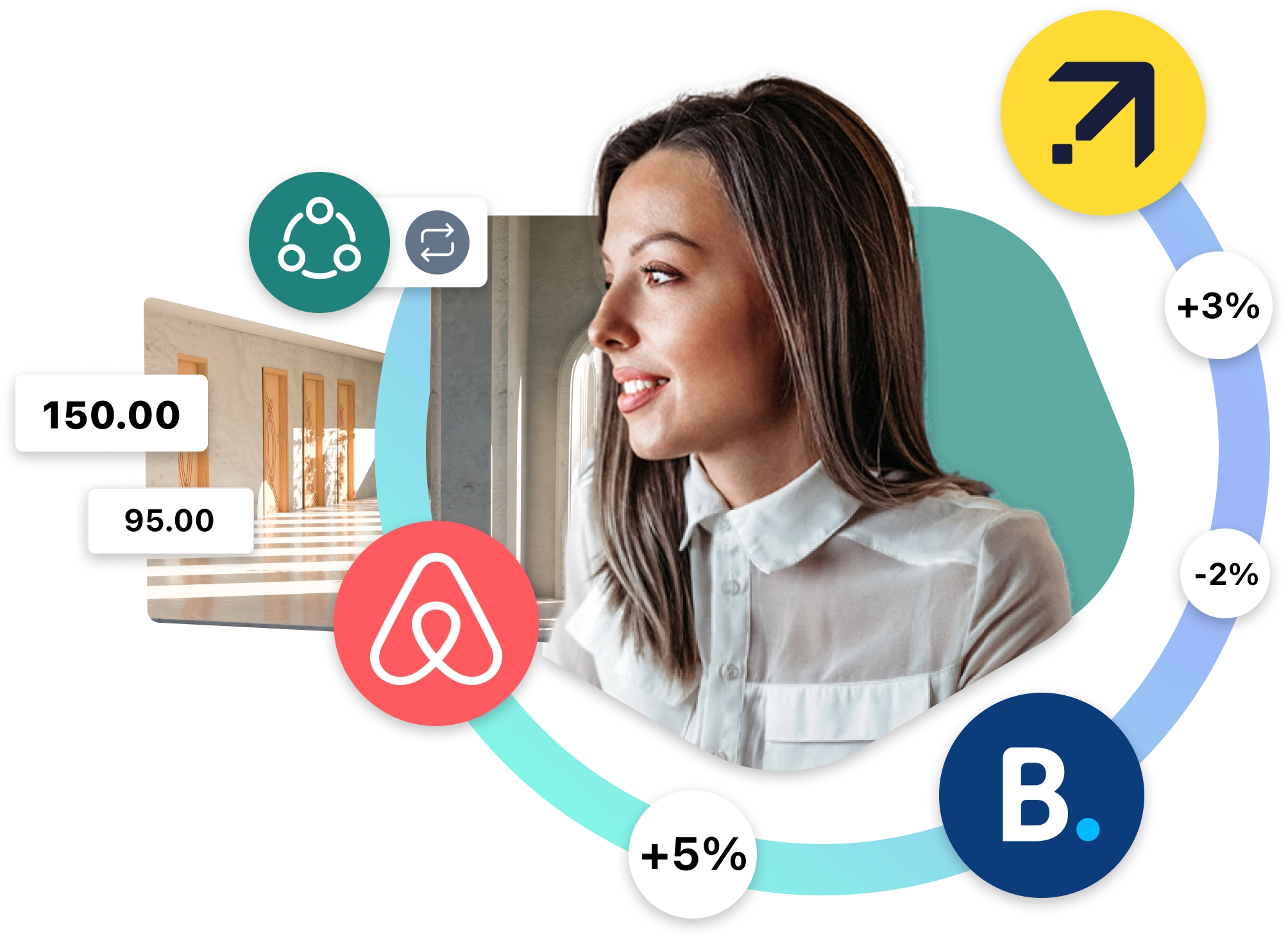
For most UK hotels, the core OTA and distribution landscape includes Booking.com, Expedia, Airbnb and Google Hotel Ads, with relevance varying by property type and market segment. These integrations matter because pricing decisions should reflect where inventory is actually sold and how much manual distribution work can be removed. A hotel software platform is commercially stronger when the main UK-facing demand channels are deeply integrated rather than treated as superficial connection points.
14What role does revenue management play in hotel software pricing?
Revenue management is the discipline of setting room rates to match market demand, booking pace and competitive conditions. In pricing terms, it may be included in the core subscription, sold as an upgrade or replaced by basic dynamic pricing rules. For UK hoteliers, the key commercial question is whether the software supports faster, better-informed rate decisions without requiring a separate specialist RMS contract, especially where teams are small and margin discipline matters.
15What is dynamic pricing and should it be included in the base package?
Dynamic pricing means adjusting rates in response to changing demand, competitor movements, lead time and occupancy patterns. Whether it should sit in the base package depends on property complexity, but for many UK independents it is increasingly a core expectation rather than a premium extra. When hotel software pricing pages mention AI pricing or automated rate rules, buyers should check whether those tools are included, limited by tier or sold as an optional enhancement.
16How can a hotel calculate ROI before changing software?
ROI is the financial return created by lower admin time, fewer errors, stronger direct bookings, better rate control and reduced tool overlap. A practical pre-purchase calculation should compare current spend on software, staff time and distribution inefficiencies with the expected commercial gains after implementation. In the UK market, the clearest ROI cases usually come from replacing fragmented systems with a single operational platform that improves both revenue capture and day-to-day execution.
17How long does implementation usually take and can setup fees apply?
Implementation is the process of configuring the system, migrating data, mapping rates, connecting channels and training staff. Timelines vary by property size, data quality and integration complexity, while setup fees may apply where onboarding support is more hands-on. For UK buyers, implementation should be evaluated as both a timing issue and a commercial cost category. A low subscription can lose strategic appeal if go-live requires substantial extra spend or operational disruption.
18Which contract terms are most important when reviewing hotel software pricing?
The most important contract terms are billing frequency, minimum commitment, renewal mechanics, cancellation notice, implementation scope, support access, price-change clauses and data export rights. These terms shape flexibility just as much as the subscription amount itself. UK hoteliers should also confirm whether VAT is additional and whether payment-related charges sit inside or outside the core agreement. In B2B software purchasing, contract clarity is often the difference between apparent affordability and real control.
19Why is cloud software important when comparing pricing and functionality?
Cloud software is software delivered online through a recurring service model rather than installed locally on hotel hardware. This matters because it changes both cost structure and operational agility: updates are continuous, remote access is easier and expansion across rooms or properties is usually simpler. In UK hotel software buying, cloud delivery is now a baseline expectation, but buyers should still verify uptime approach, integration reliability and whether true scalability is reflected in pricing rules.
20Can hotel software scale from one property to multiple sites without a full system change?
Scalability means the system can support more rooms, users, rate plans and properties without forcing a costly replatform. For hotel groups, aparthotels and expanding operators, this is a pricing issue as much as a technical one because costs, reporting and permissions must remain manageable as complexity grows. UK buyers should therefore test whether software pricing scales logically across sites and whether multi-property visibility is designed into the commercial model from the outset.
21Which privacy and compliance issues should appear around a UK hotel software pricing decision?
In the UK, privacy compliance should be visible because hotel software handles guest data, payment data and website tracking. The core legal context is UK GDPR, while cookies and similar technologies are governed by PECR and enforced by the ICO. For buyers, this means pricing pages and related commercial materials should not treat privacy as a footnote. Compliance clarity affects trust, procurement review and the suitability of any guest-facing booking journey.
22How should UK hotels assess payment processing costs inside software pricing?
Payment processing costs should be assessed as part of total revenue capture, not as a separate finance-only topic. Deposit handling, refunds, virtual cards, chargebacks and checkout conversion all influence profitability, especially where direct booking strategy is important. A hotel software platform may include payments, connect to external providers or support different charging structures, so UK buyers should compare how payment flows affect reconciliation, guest experience and the real cost of taking a reservation.
23What questions should hoteliers ask when comparing hotel software pricing pages?
The most strategic questions are: what is included, what costs extra, how pricing scales, which integrations are native, what implementation covers, how support is delivered, what contract terms apply and what ROI should reasonably be expected. These questions matter because pricing pages often compress commercial complexity into a simplified package view. For UK decision-makers, a strong evaluation framework should balance informational, commercial and decision-stage intent rather than relying on list price alone.
24Which FAQ topics are most likely to perform well in AI overviews for hotel software pricing?
The strongest AI-overview topics are definitions, total cost, VAT, pricing models, hidden fees, contracts, implementation, integrations, automation, scalability, OTA strategy, cloud delivery, payments and ROI. These topics work because they match the way buyers phrase decision-stage searches and the way AI systems summarise complex B2B categories. For the UK market, answers are stronger when they combine clear definitions with local commercial context, not just generic software feature descriptions.
25How does RoomRaccoon position its pricing for the UK hotel market?
RoomRaccoon positions its UK pricing as a pay-per-room, all-in-one subscription structure with four packages, upgrade options and a 20% saving on annual contracts. Its wider UK-facing product pages also frame the platform around integrated hotel management, direct booking, channel connectivity and automated pricing support. For UK hoteliers researching software pricing, that positions RoomRaccoon within the bundled SaaS category rather than as a single-function tool or pure commission-led distribution product.

















 AI pricing — RaccoonRev Plus